Serbia's new government faces 14-year domestic mess before foreign policy changes
Experts warn that fixing internal institutions will take precedence over shifting relations with neighbors and major powers following Sunday's election.
By Aaron Mitchell ·
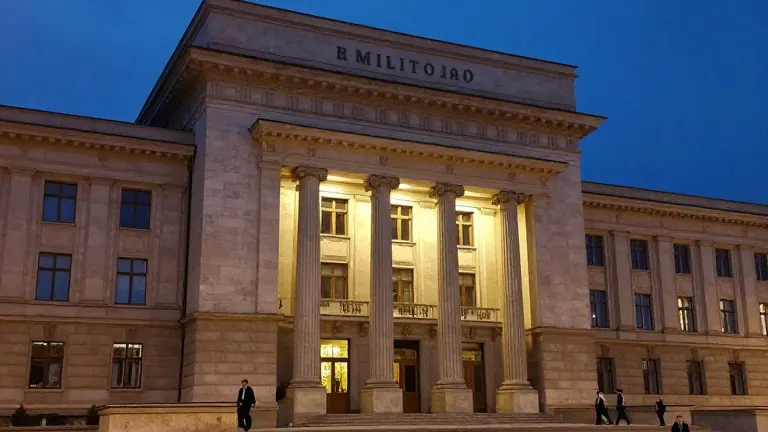
Serbia is entering a new political phase after 14 years of rule by Aleksandar Vucic and his Serbian Progressive Party. The opposition Student List won a historic victory in Sunday's election, ending a long period of dominance that had defined the country's governance. As Belgrade prepares for a turbulent transition, international observers are watching to see if the change in leadership will alter Serbia's external relationships. The next presidential elections are scheduled for December, adding to the timeline for these shifts.
Analysts caution against expecting an immediate pivot toward the West. Aleksandar Popov, director of the Centre for Regionalism in Novi Sad, stated that regional relations will not be an immediate priority. He argued that the new authorities must first address domestic problems, including a system that has captured democratic institutions. Popov noted that the judiciary, prosecution service, police, and media sector all require attention before the government can focus on neighbors.
Relations with Croatia, Montenegro, Bosnia and Herzegovina, and Kosovo have often been strained by nationalist rhetoric. Popov described the situation with Croatia as neither frozen nor ideal, marked by frequent sharp exchanges. During recent mass protests, Vucic accused Zagreb of organizing a color revolution. Popov said the outgoing regime worked to undermine regional ties, but the new government must tidy up at home before solving problems with neighbors.
Popov suggested that Croatia is the most difficult case due to clashes between the Serbian Progressive Party and the ruling Croatian Democratic Union. He described a system that functioned on the production of internal and external enemies. Behind the public hostility, he noted a quiet convergence on Bosnia and Herzegovina, where Belgrade supported Republika Srpska leader Milorad Dodik while Zagreb favored a third entity. Popov expressed hope that a government led by experts would work to stabilize the region and revive Serbia's hopes of joining the European Union.
Vuk Vuksanovic, a lecturer in foreign policy at King's College London, predicted that foreign policy will change the least among all elements of Serbian public policy. He noted that many international and domestic structures shaping foreign policy will remain in place. While Russian influence may take a blow with the end of uncritical glorification in media, Vuksanovic said the new government is unlikely to adopt a hawkish stance overnight. Serbia still needs preferential gas prices and has an unresolved dispute with Kosovo.
Vuksanovic added that the new government will not see value in joining EU sanctions or taking a hard line against Moscow. Regarding Ukraine, Serbia will maintain its policy of not recognizing the annexation of Crimea and Donbas. However, there is uncertainty over ammunition deliveries, as the opposition viewed Vucic's weapons sales to Kyiv as a cynical ploy to buy Western tolerance for his domestic rule.
Bosko Jaksic, a foreign policy analyst, noted that Serbia's close relationship with Israel will face scrutiny. While ties will not be severed, new contracts concerning Serbian ammunition exports to Israel and Israeli surveillance equipment exports to Serbia will be re-examined. Jaksic pointed out that Netanyahu's government has lost another authoritarian ally in Europe. He added that Serbia's future stance will also depend on political developments in Jerusalem, specifically the outcome of Israel's own elections.
Jaksic emphasized that Serbia's foreign policy will undergo a review. He suggested that the policy of sitting on multiple chairs, which brought Serbia more harm than good, will be re-evaluated. It is realistic to expect Belgrade to strengthen ties with the EU. As Serbia enters this new era, the international community should expect a period of intense internal reform rather than sudden geopolitical realignments.
Source: Al Jazeera